Water Damage Assessment and Inspection for Homes
A water damage assessment is the inspection that decides everything that follows: where the water went, what category it is, which materials can be dried, and which must come out. It is a survey with meters and a written record, not a glance at a stain. Water Damage Repair Emergency refers this work to independent licensed residential contractors. We do not perform inspections ourselves.
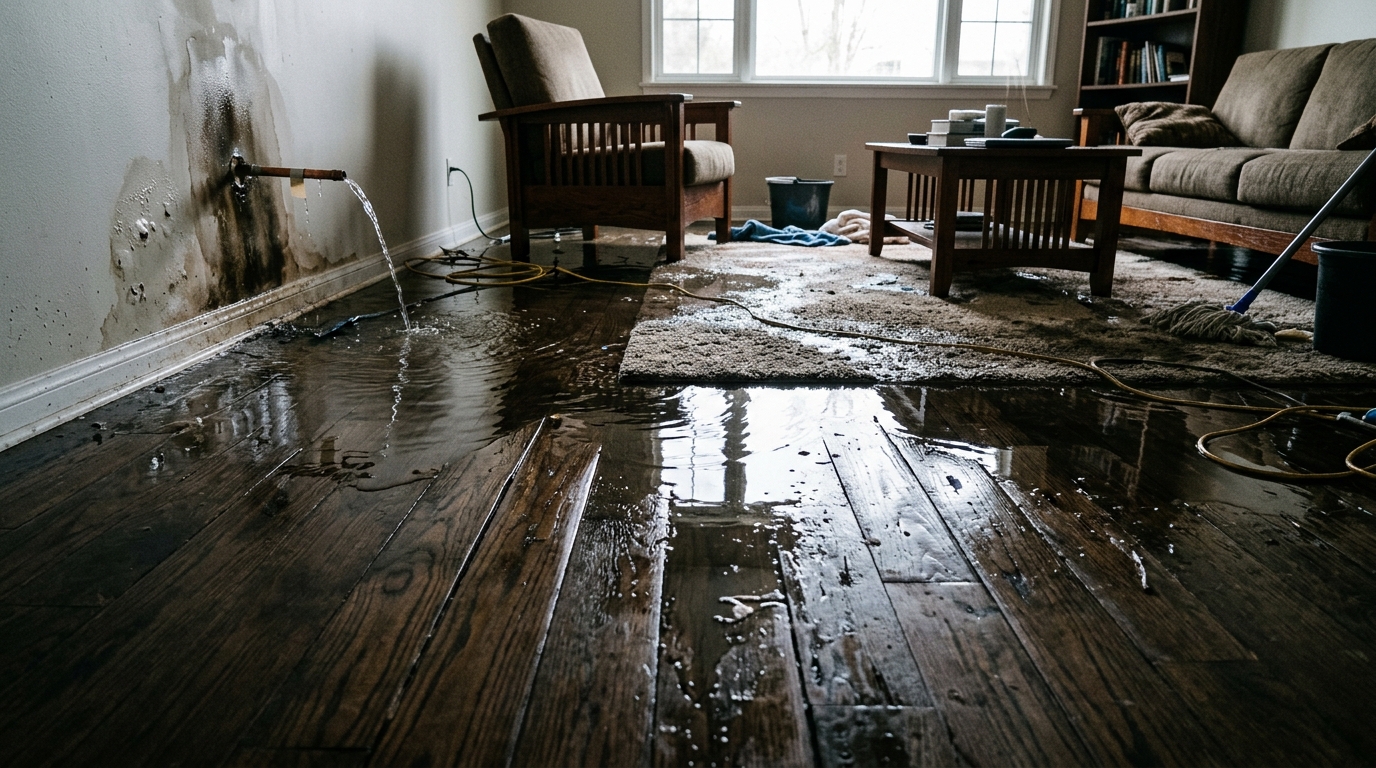
What a thorough water damage assessment includes
A useful assessment produces a moisture map, a category decision, and a recommended scope. A walk-through without numbers is only a first look.
The contractor starts at the source, then follows water along the easiest paths: down walls, into base plates, under flooring, and into rooms below a ceiling leak. Moisture meters (often both pin and pinless) and, when helpful, a thermal camera show wet assemblies that still look dry. Those readings are compared with unaffected materials in the same house so the dry target is local, not a generic number from a brochure.
Category 1, 2, or 3 is decided from the source and from how long the water has sat. That decision changes protective equipment and what can be saved. The assessment should be written down: rooms, materials, meter readings, and a first recommendation for extraction, drying, or demolition. That document is the starting point for both the work and any insurance review.
Moisture mapping is the product, not a photo album
Photos help. Readings on a floor plan help more. Together they show why a closet or a hallway is in the scope.
A moisture map is a simple diagram or table that records wet materials and their readings over time. Without it, later arguments about how far the loss extended become guesses. Ask to see the first map before large demolition begins.
Assessment is not a free pass to tear out the kitchen
The inspection should justify each opening. Exploratory cuts are sometimes needed. They should be explained.
If a contractor wants to remove cabinets or hardwood on day one, ask which readings support that. Some finishes can be dried in place after clean-water losses. The assessment is where that case is made or rejected.
Safety limits what can be inspected on the first visit
Standing water near electrical, sagging ceilings, and sewage all change how far an inspector should go until controls are in place.
A responsible assessment may be staged: make the house safer, extract, then complete cavity readings. That is not a delay tactic. It is a way to inspect without creating a shock or contamination hazard.
How assessment connects to mitigation, drying, and claims
The inspection is the first chapter of the restoration process, and it is the evidence file for a claim.
Mitigation decisions (what to extract, what to open, what to protect) should follow the assessment, not precede it except for obvious safety steps. Structural drying targets come from the same readings. If you file a water damage insurance claim, the assessor's notes are often the most useful document you can hand an adjuster, alongside photographs.
This network can connect you with a residential contractor who performs assessments as part of emergency work, when one is available in your ZIP code. Availability varies. The contractor, not this website, is responsible for the accuracy of the inspection.
What you can prepare before the inspector arrives
You can make the assessment faster and safer without doing the inspector's job.
If it is safe, shut the water source, keep people out of sewage or floodwater, and photograph rooms before moving too much. Make a note of when you first saw the water. Leave wet ceilings alone if they are bulging heavily; tell the inspector as soon as they arrive. Have a path to the water shutoff and the electrical panel if those areas are dry enough to use.
Frequently Asked Questions
Answers about residential water damage assessment, moisture maps, and how an inspection shapes the rest of the job.
No. A home inspection is a general property review. A water damage assessment is a focused moisture and category survey after a loss, usually with meters and a written moisture map.
A modest single-room loss may be surveyed in a short first visit. Multi-room or concealed losses take longer and may need a second pass after extraction. There is no honest fixed duration.
Visible damage is only part of the picture. Water in a wall or under a floor is easy to underestimate. The assessment is how you avoid drying the wrong rooms and missing the wet ones.
No. We refer independent licensed contractors. If one is available in your area, that contractor performs the assessment and is responsible for the findings.