The Water Damage Restoration Process: What to Expect
The water damage restoration process in a home is a sequence with a reason for each step: inspect and classify, extract standing water, remove what cannot be dried, dry what remains to a documented standard, then rebuild. Skipping ahead to paint or new flooring is how hidden moisture becomes a second loss. This page is a homeowner's tour of that sequence. Independent contractors on this referral network perform the work. We do not.
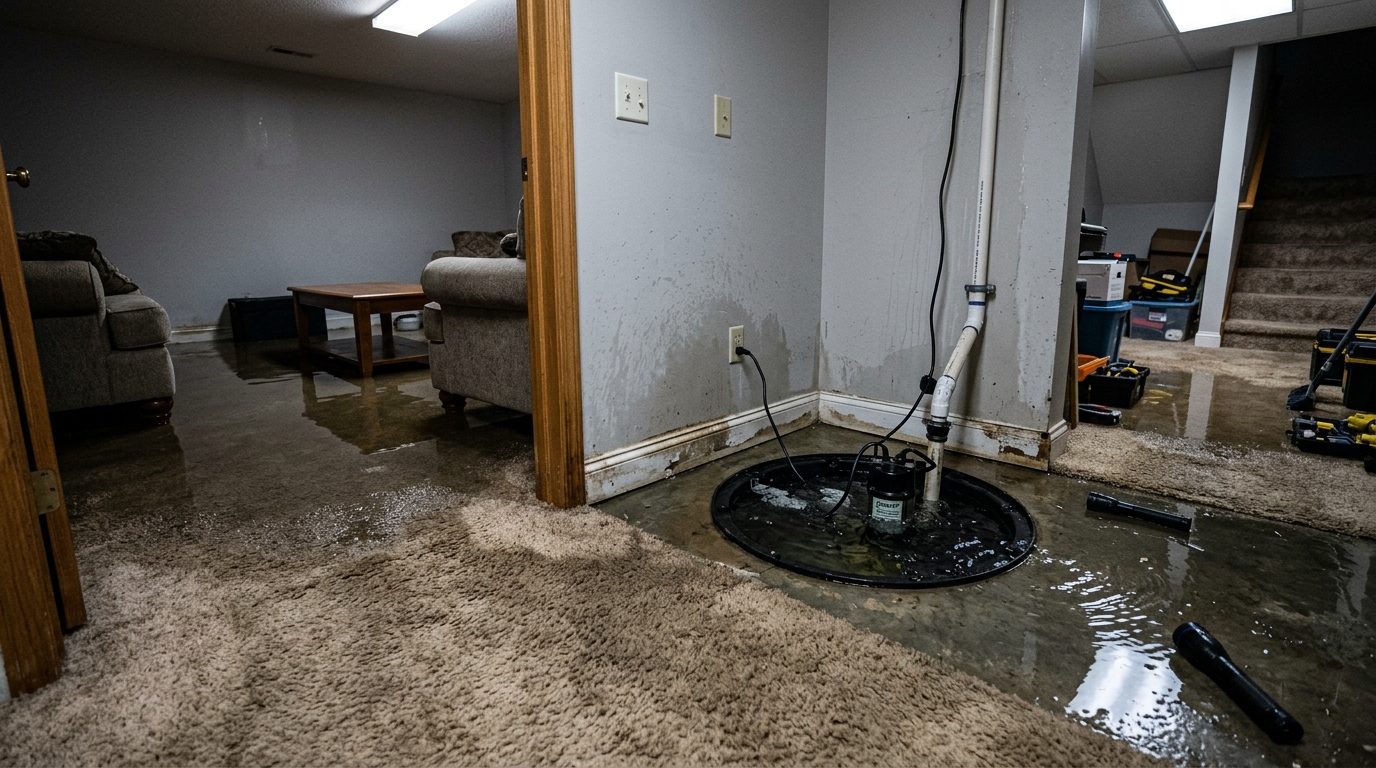
Step 1 and 2: inspection, category, and extraction
Nothing later in the process is reliable until someone has classified the water and removed the free liquid.
Inspection is a walk-through with meters, a look at the source, and a decision about Category 1, 2, or 3 water. That decision changes protective equipment, what can be saved, and how cleanup is done. If the category is uncertain, a careful contractor treats the water as dirtier until they know more, not cleaner.
Extraction uses truck-mounted or portable vacuum systems and, in deep basement water, submersible pumps. The goal is to remove as much liquid as possible before vapor drying begins. This is also the stage at which contents are moved or blocked up, and at which a first moisture map is drawn. If you want a closer look at the removal step, see the emergency water extraction page.
Step 3: limited demolition, only where drying requires it
Not every wet wall is torn out. Not every wet wall can be saved. The moisture meter, not the calendar, should decide.
Baseboard removal, a flood cut on wet drywall (often about two feet, adjusted to the wet line and the stud bay), and insulation removal are common when cavities cannot be dried closed. The contractor should explain why a cut is needed and photograph it. Demolition without a drying plan is just a mess.
Step 4: structural drying and daily monitoring
Air movers and dehumidifiers run as a system. Daily readings show whether the system is working.
A drying chamber is a room (or a group of rooms) managed so moist air is pulled out of materials and then out of the air. Technicians record moisture in drywall, wood, and the air (temperature, relative humidity, and grains per pound). Equipment comes out when readings meet a dry standard consistent with IICRC practice and the home's unaffected materials, not when a set number of days has passed.
Step 5: rebuild only after a dry standard
New drywall, flooring, and paint belong at the end. They are not part of emergency day one.
Once materials are documented dry and, after dirty-water losses, cleaned, rebuild can begin. That work may be the same firm or a different trade. Do not let anyone close a wall that is still above a reasonable dry target. If you are filing a claim, the drying log is the bridge between mitigation and rebuild estimates.
How long the process takes, and why 'three days' is a starting guess
Many clean-water rooms dry in a few days of continuous equipment. Heavier losses, thicker assemblies, and cold or humid weather take longer.
A modest Category 1 bathroom overflow might be extracted in hours and dry in three to five days. A sewage backup in a finished basement can take longer because of demolition, cleaning, and a more cautious dry-down. Open-ended promises of a one-day complete restoration usually skip the monitoring step.
Our page on how long water damage restoration takes goes into timelines in more detail. Weather, HVAC, and whether windows are left open all affect the psychrometric plan. A contractor who cannot explain why the equipment is still there on day four should be asked to show the log.
Where you fit in the process
You approve scopes, keep a record, and decide when rebuild starts. You should not be asked to manage the meters yourself.
Ask for a written process on day one: what will happen today, what will be checked tomorrow, and when you will see a rebuild estimate if one is needed. Walk the job with the technician when you can. If something in your house must stay off-limits (a nursery, a home office with records), say so at the start so containment can be planned.
If insurance is involved, share the process notes with the adjuster. If you are paying yourself, the same notes tell you when you can reasonably stop paying for equipment days. Educational cost information is on the cost pillar. Questions about coverage belong on the insurance pages, and ultimately with your insurer.
Frequently Asked Questions
Answers about the water damage restoration process, why drying comes before rebuild, and what you should receive in writing.
In order: inspect and classify the water, extract standing water, remove materials that cannot be dried, dry remaining structure to a documented standard with daily monitoring, then rebuild. Cleanup and sanitizing are part of the middle of that sequence, especially on Category 2 and 3 losses.
Because the assembly is still wet. New board on a wet stud bay traps moisture and can lead to mold and a failed repair. Rebuild is the last step, after readings support it.
An independent licensed residential contractor, if one is available in your ZIP code. We are a referral network. We do not send our own crew and we do not guarantee a particular process duration.
At minimum: an authorization for the work you approved, a first-day scope, and moisture readings or a drying log if equipment is left on site. A rebuild estimate can follow when the house is dry.